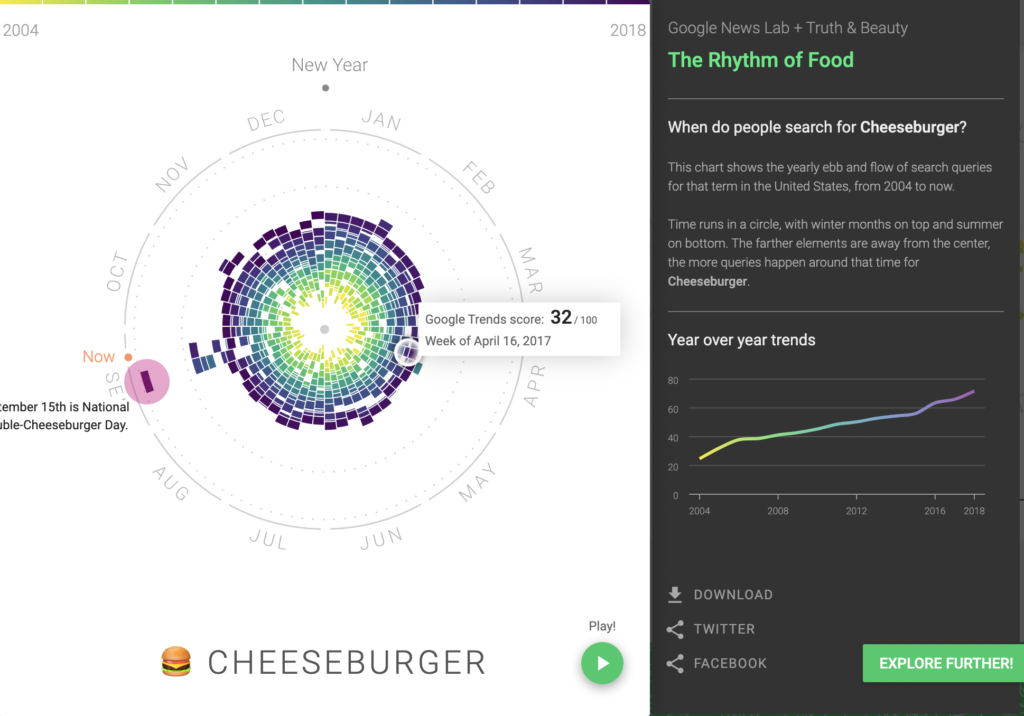
Having watched and discussed Miriam Posner’s video on the components of a DH project, the site that I chose to explore out of the variety of options was Rhythm of Food. This project caught my attention because this digital endeavor is a captivating fusion of culinary arts and data visualization, making it a fascinating exploration for anyone interested in the world of food and culture.
In the course of this project, they analyzed hundreds of ingredients, recipes, and other food related search terms, all of which Google search data came from Google Trends. They used Google Knowledge Graph topics (which distinguishes e.g. “Apple computers” from the fruit) and focus on data from the United States. Another notable source was FooDB because the site comprises 201 topics and presents 155,705 individual data points. The Rhythm of Food is a collaboration between Google News Lab and Truth & Beauty. Where they explored the hidden patterns in Google search trend data. The goal of the project was to reveal food trends over the years pertaining to google searches. They explored the hidden patterns in Google search trend data. This project shed light on the many facets of food seasonality, as seen through the lens of search interest in the United States over the last 15 years. After getting the data from their sources and analyzing them they had an overall unique visualized presentation. The website incorporates timeline, text analysis, bar graphs, a year clock interactive graph and graphics to present the culinary data. Visitors can explore the ebb and flow of food trends, ingredient popularity, and cultural influences through either one of these data visualizations as they are all incorporated in each data.
As I delved into this project, I found myself pondering a new question: How can we further incorporate cultural contexts and historical narratives into the visualization of culinary data and how can projects like the Rhythm of Food contribute to cultural preservation and appreciation? While the Rhythm of Food provides a rich overview of trends and ingredients, a deeper dive into the stories and traditions behind these culinary journeys could add even more flavor to the experience. The target audience for this data could be people who are curious about public intake, maybe even someone trying to educate people about their certain food intake.
