By nature, jazz is a collaborative genre. Multitudes of artists have inspired and played with each other, creating an intricate network of musicians. Cristina Pattuelli’s “Linked Jazz” seeks to visually map out these connections.
Data is sourced from online interviews, documents, and transcriptions and retrieved in JSON format, which translates (legible) writing into online text. The program highlights names and the resulting connections are shown in a web as well as a gallery format. The data ranges from the late 19th century to the 21st century. Some artists have many connections, while some have none. However, this may be due to a lack of reliable data surrounding the artist. One cannot assume that he solely operated by himself.
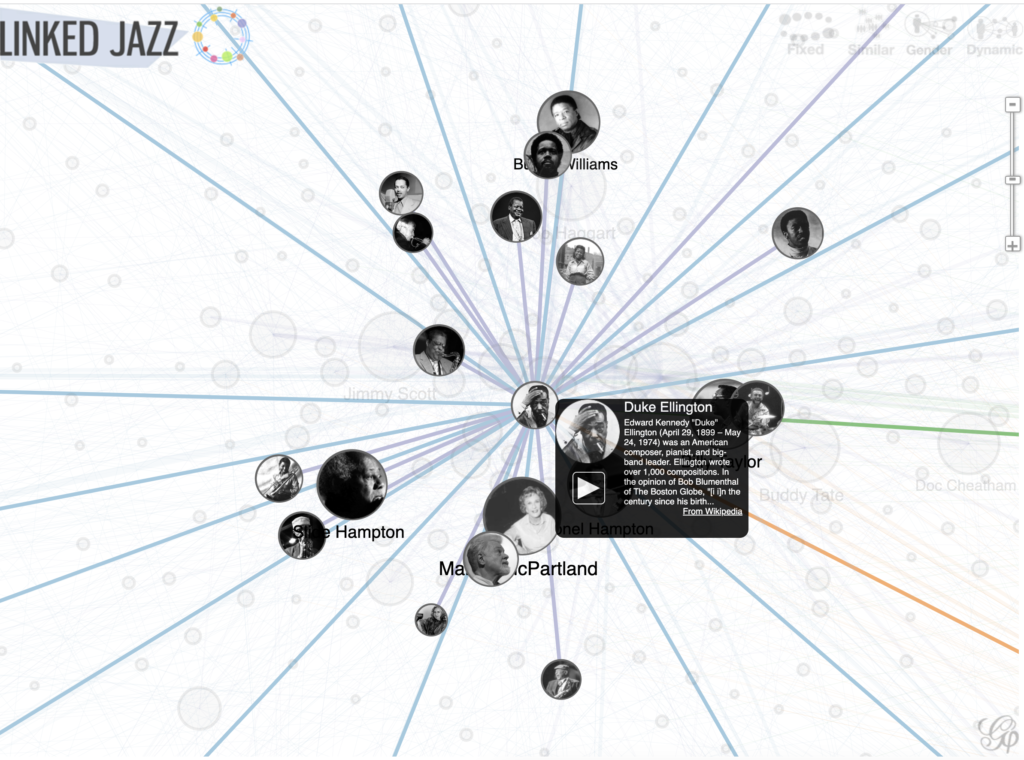
“Linked Jazz” is open source and free to access, but there’s a major catch. The API (interface) is depreciated, meaning that the website is no longer being updated. While it is functional now, accessibility issues could arise in the future. The website is targeted towards people who enjoy jazz, but anyone could understand the data being presented.
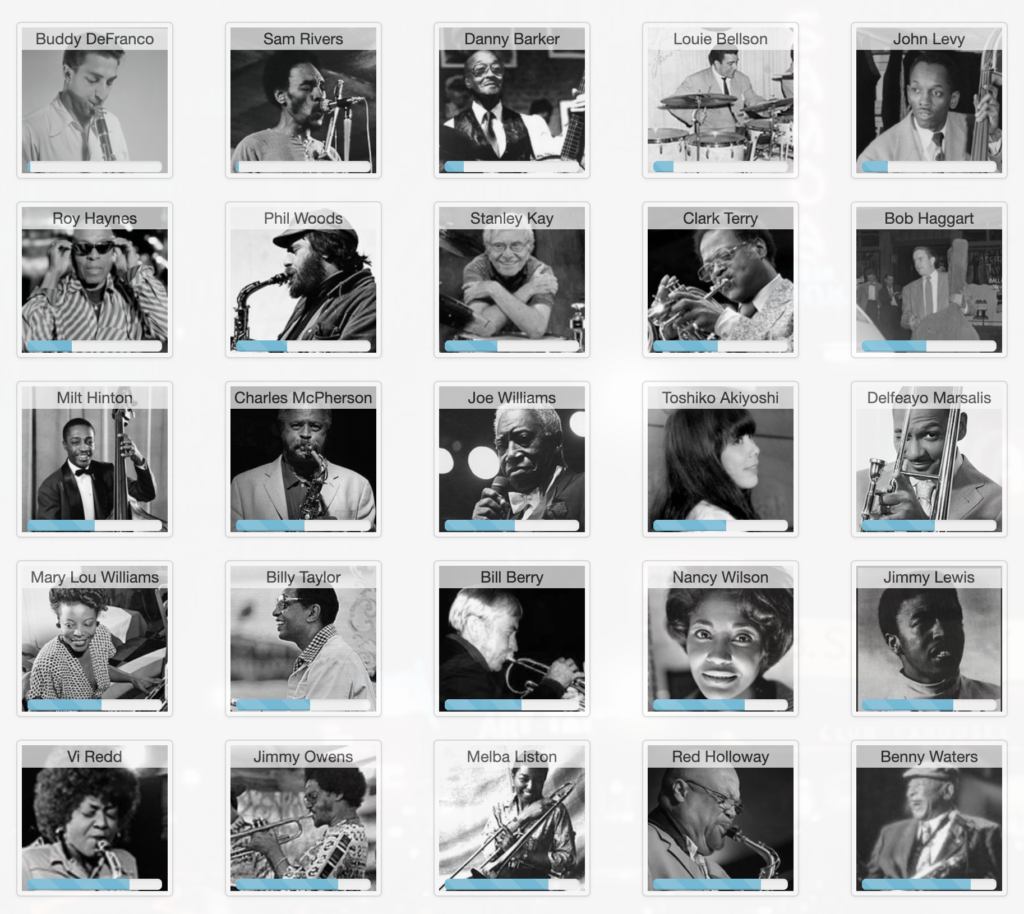
My big question is whether there is a racial divide in the connections shown. Knowing that jazz grew from the segregated south, it would be interesting to see how artists interacted, or didn’t, with artists of a different race. Was jazz an integrated genre, or did artists stick to their own racial group? Moreover, it would be interesting to see if there was a one-way connection between artists of a different race, in which black artists credit white artists more than white artists credit black ones. It was a prevalent aspect in early rock and roll, and it might also be true for jazz.

This is really cool! I’ve always wondered how musicians choose and go about collaborating with other musicians. I wonder if smaller musicians’ careers were boosted by collaborations with larger musicians. I also wonder if it was more common to collaborate with musicians of the same instrument or different instrument.